
Uncategorized
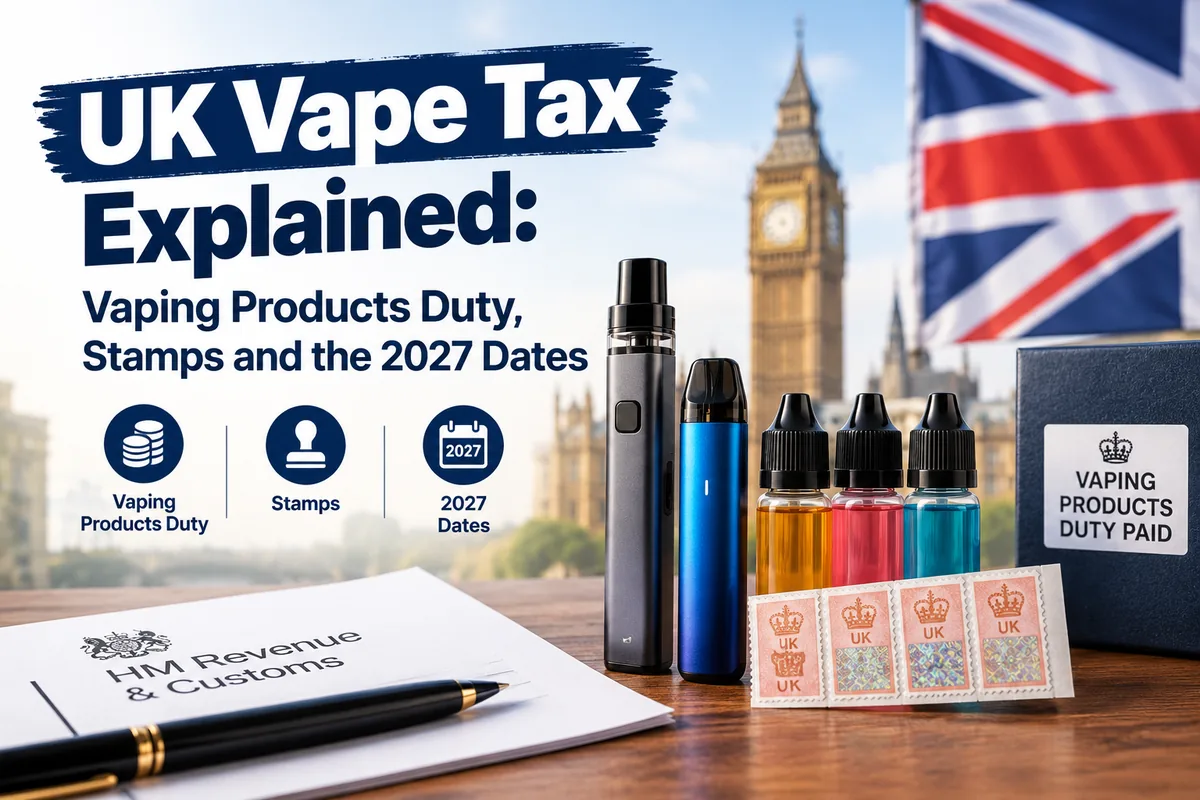
UK Vape Tax Explained: Vaping Products Duty, Stamps and the 2027 Dates
Oct
Since 1 October 2026, every millilitre of vaping liquid sold in the UK carries a tax called Vaping Products Duty. The rate is 22p per millilitre, charged as £2.20 on every 10ml of liquid, and it applies whether the liquid contains nicotine or not. If you have noticed new stamps appearing on vape packaging, or liquid costing more than it did in September, this guide explains what changed, what the stamp means, and the two dates in 2027 that still matter.
What is the UK vape tax, and when did it start?
The UK vape tax is Vaping Products Duty, an excise duty that came into force on 1 October 2026. It is charged on all vaping liquid manufactured in or imported into the UK, at £2.20 per 10ml, and it covers liquid in bottles, pods and cartridges alike.
The duty is collected from manufacturers, importers and wholesalers rather than at the till, in the same way as the duty on fuel or alcohol. Retailers buy stock that is already duty paid, and most pass the cost through in the shelf price, with VAT charged on top. The government expects the duty to raise more than £550 million a year by the end of the decade, and it sits alongside the existing rules on strength, bottle size and the disposable vape ban that the beginner guide to vaping on this site explains.
How much duty is on a bottle or a pod?
The duty is flat per millilitre, so the maths is simple: a 2ml pod carries 44p of duty, a 10ml bottle carries £2.20, and a 10ml refill container for a big puff kit also carries £2.20. Nicotine strength makes no difference to the amount.
That flat rate changes how formats compare. Before October, liquid in a large refill container was simply cheaper per millilitre than liquid in small pods. The duty narrows that gap a little, because every millilitre now carries the same 22p wherever it sits. A bottled liquid such as Elfliq nic salt carries the full £2.20 in its 10ml bottle, while each 2ml pod in the prefilled pod kits range carries 44p, and the rest of its cost is the hardware, the pod and the flavour.
What is the vape duty stamp, and what if a pack has no stamp?
The duty stamp is a mark on the outer retail packaging showing that a vaping product has entered the UK duty system. New duty liable products released for sale since October 2026 must carry one, and it is a tax and supply chain mark, not a health or safety label.
A missing stamp does not automatically mean a product is illegal right now. Retailers already holding eligible stock from before the new system can keep selling it without a stamp until 31 March 2027, so stamped and unstamped packs will sit side by side through this winter. The stamp is still a useful buying check: on newly released stock it shows the product came through a duty paying UK supply chain rather than the illicit market the scheme was built to squeeze.
Which products does the duty actually cover?
The duty covers vaping liquid in every form: bottled e liquid, prefilled pods and cartridges, nicotine free liquid, and liquid sold for mixing. It is the liquid that is taxed, not the device, so batteries, kits and empty hardware carry no Vaping Products Duty themselves.
This is why a refillable kit user pays the duty through their bottles, while a prefilled pod user pays it inside each pod. It also explains the design of big puff vapes: kits such as the Lost Mary BM6000 pair a small 2ml pod with a separate 10ml refill container, and the duty simply follows the liquid, 44p on the pod and £2.20 on the container. Products that contain no vaping liquid at all, such as nicotine pouches, sit outside this duty because they are not vaping products.
What changes in 2027?
Two dates matter. From 1 January 2027, only digital duty stamps can be applied to new products, replacing the transitional stamps used this autumn. From 1 April 2027, the transition ends and every vaping product sold in the UK must carry a valid duty stamp.
After April, an unstamped pack on a shop shelf is a genuine warning sign rather than old stock, and that is the point at which the stamp becomes the quickest legality check a buyer has. Travellers should also know the personal allowance: you can bring up to 50ml of vaping liquid into Great Britain for personal use without paying duty, and anything above that must be declared, with duty and tax due on the full amount.
How much duty does a typical vaper actually pay?
It depends only on how much liquid you use. At 22p per millilitre, a light vaper finishing 10ml a week pays £2.20 a week in duty, around £114 a year, while a heavy vaper using 30ml a week pays about £343 a year in duty alone.
Pod users can do the same sum with the 44p figure: one 2ml pod a day comes to just over £3 a week in duty, roughly £160 a year. These figures are the tax only, before the liquid, the hardware and VAT on top, but they show why the duty hits heavy users hardest and why the government expects it to raise so much. They also show the limit of the change: for a light user, the duty is a small weekly sum, not a reason to return to cigarettes, which carry far heavier taxes of their own.
How can vapers keep costs sensible under the new duty?
Compare formats by the millilitre rather than by the pack, buy from UK retailers selling duty paid stock, and be wary of deals that look too cheap after April 2027, because untaxed illicit liquid is exactly what the stamp scheme is designed to push out.
The duty itself cannot be shopped around, since it is the same 22p per millilitre everywhere in the UK. What you can choose is the format that wastes least for your habit: bottled nic salts in a refillable kit for daily use at home, or prefilled pods for convenience when you travel. Either way, you are paying the same duty per millilitre, so the decision stays where it always was: the kit, the flavours and how much liquid you actually finish before it goes stale.

Pingback: Are Big Puff Vapes Legal in the UK? The 2ml Rule Explained - vapora.uk